Circles of Support

cirlce of friends
It is rare to have a space where it is safe reveal all of who you are without judgment, condemnation or ridicule; especially the dark, denied and disowned parts of the psyche Jung termed the shadow.

This concept was expanded by Robert Bly in A Little Book on the Human Shadow. He asserts that we are born with a 360° personality where all aspects of our human nature are expressed freely and uninhibited. As we are socialized by parents, society, religion and other institutions we learn that certain expressions are unacceptable. This learning occurs subtly or through experiences that leave lasting wounds.

We learn the lessons of acceptability and appropriateness through angry or shaming responses or some other form of withdrawal of attention and love. When that occurs we carve out that expression of our human nature and place it in an imaginary bag carried throughout life.

While shadows are often viewed as dark and sinister, other expressions the 360° personality can end up in that bag as well. For example children often learn that crying is unacceptable and may repress the expression of sadness as a result. A child’s expression of his/her own power may frighten an insecure parent’s sense of control and cause the parent to act in ways to inhibit those expressions. As a youth I often pretended to be various entertainers. While those expressions were affirmed, I could have easily been told to stop being silly and get serious resulting in a splitting off the part of my personality that likes to play and perform.

Shadows occur individually and collectively. In my July 16, 2013 post titled, The Shadow of Race, I applied the concept of the shadow to racism. Whereas it was once acceptable to proudly own racist ideologies and behaviors, it is no longer the case today. This can be applied to owning sexist or chauvinistic views toward women and other –isms existing within the collective.

Whether we deny the existence of these parts, they live within and find expression. Have you ever found yourself acting in ways you said you would never act? Have you ever found yourself confused about some action or behavior that is out of your usual character? Both are indications of how shadows emerge and can be starting points for deeper exploration.

And there is the matter of projection. What is denied in the self is often observed in others. Often when we have very strong feelings, either negative or positive, about another person’s behavior we have come face to face with a disowned part of ourselves. The sentiment might be, “if its unacceptable for me to be like this no one else should either”. Seeing these characteristics in others also moves us toward seeing them in ourselves and our strong reactions can serve as a defense to this awareness. If we are projecting what some call golden shadows, one may simply not believe they could possess admirable qualities such as courage, strength or even goodness while easily identifying and affirming them in others.

Much energy is expended keeping shadows out of conscious awareness. It is the nature of what is unconscious to seek ascent into awareness. Consider the energy required to hold a beach ball submerged in water. Consider how efforts to keep that beach ball underwater will inhibit other pleasurable activities one might wish to engage while at the beach. Just as the beach ball slips from our grasp rising to the surface, shadows escape the grip of repression into expression.

Granted, certain demonstrations of our human nature such as violence and aggression must be contained if we wish to live in a civilized society; however, at the core of any human expression is emotional energy. Reclaiming shadow elements are ultimately about reclaiming the full reserve of energy contained within the 360° personality and learning to channel that energy consciously and with intention in service of effective outcomes in the various areas of our lives. Thus, the value of doing “shadow” work.

Shadows are not easily identified or owned. We disowned these parts of ourselves because of the consequences experienced when they were expressed. Hence, the importance of a supportive, non-shaming and unconditionally accepting space to work toward, once again, being whole.

I have had the privilege of doing my shadow work in various circles of support for nearly fourteen years; ritual spaces where the bag can be emptied with no real world consequences. I have raged and grieved, cursed and blessed, been held and held space for others to do their own work to become whole; a space where light shines on darkness and darkness is transformed into light.

Posted in Psychology, Spirituality | Tagged , , , , , , | 1 Comment

The Artist’s Brush

family
I started 2013 on fire with passion and intention. I ended the year with illness and apathy. The beginning of the end was my annual “Christmas party”. In November 2008 I bought a new home and the party served as an invitation for my family to see the new place and celebrate the holidays. The small gathering of my immediate family has since grown to include a few friends and relatives I didn’t even know I had.

Though we still call it the Christmas party, it has actually occurred between the Christmas and New Year’s holidays in recent years. The party typically begins slowly, and quietly, with people trickling in. At some point the food is self-served in our signature informal fashion. The intention is not about stuffy formalities, rather, good food and fun in as comfortable an atmosphere as possible. By this time almost everyone has arrived and spirits of various sorts begin to take effect. Music of various genres fill the air until my mother makes her request for zydeco. And when mom requests zydeco, mom gets zydeco. That’s when things really start getting interesting.

Considering I am not much of a dancer, my living room turns into a dance floor every year. We’ve had everything from salsa dancing to line dancing and every form of music from zydeco to country to dance to pop to soul to reggae. A soul train line has broken out a couple of times and we even had a step show this year.

Throughout the day various conversations are taking place. One friend’s sole mission every year is to embellish, and I do mean embellish, stories about my past escapades and how neat I like to keep my surroundings.

At some point comes the ceremonial exchanging of gifts. Traditionally, we only give gifts to the children in the family. Of course, there are exceptions. I received an unexpected, and very generous, gift card to Starbucks this year. Given that some of the “children” are no longer children – three nephews over 21 and two nieces 18 – Santa Claus is streamlining his list for next year.

The exchanging of gifts is something of an intermission from music and dancing but someone eventually asks, “What happened to the music?” And the festivities resume. This year the festivities resumed and did not stop. Guests who left returned and had seconds and thirds of food and new guests arrived.

When it was all said and done, I threw a party that lasted 12-hours. Best one yet but I contracted the flu and passed it along to three or four people. I was sick as a dog for most of the party but didn’t experience flu symptoms until the next day…along with an unseasonable allergy attack.

The show must go on and go on it did. With the exception of passing the along the flu bug, I have no regrets because the greatest gift I receive all year comes from this assembling of family and friends. I love the fun we have together and there is no greater joy I experience than being with my siblings, nieces and nephews and the Zydeco Queen, herself, my mom.

I started this piece with the intention of writing about last year beginning with fire, passion and intention and ending with me lying on the couch with a 101.5 degree fever, body aches and chills. But I got lost reminiscing about my party. In truth the year began with a bang and ended with a bigger bang.

Getting sick was just the wisdom of my body creating the condition for me to slow down, be still and rest. The last two months of the year began with a hectic travel schedule that had me on the road and in the air for three weekends in November. No travel in the month of December but little rest as I began working on projects for the New Year.

The fire that propelled me into 2013 was extinguished as 2014 began. With no intentions set or goals identified, I entered the New Year sick and exhausted with little energy or motivation but after a week of stillness and rest I am coming back to life. The passions are stirring and the fire is igniting. The blank canvas of a new year is waiting the artist’s brush and this is my first stroke.

Posted in Culture, Family | Tagged , , , , , , , , , , , , | Leave a comment

Sonless Fathers

father
I typically find little interesting or of value with daytime talk shows; particularly of the Jerry Springer, Maury Povich variety. I am still amazed that the “who’s the father?” theme still has appeal.

I’m not sure how many of you remember the Jenny Jones show but it was among the fray of daytime talk shows competing for your attention during the 90s and into the new millennium. I recently saw a video clip of a scene from one of the “boot camp” episodes. Out of control children are brought to the show and a drill sergeant or some other menacing authority figure yells and screams at them; the daytime talk show version of scared straight.

The drill sergeant, up close and pointing his finger directly in the face of the ten-year old boy states, “You’re not an adult til you’re 18. Do you want me to be your daddy for the next 8 years, son?” The child pauses and the drill sergeant grunts, “HUH?” The boy politely responds, “Yes Sir”, leaving the man bewildered and needing a pause. “You do”, he responds. “Why do you want me to be your daddy?” The boy responds, “I have no daddy”, prompting the man to reach down and give the boy a hug.

Whether the scene was staged or not, which some may question, is insignificant. The boys response to the scenario speaks to a reality many boys suffer through silently or expressed through acting out; father loss. Most of us are well aware of the phenomenon of sons growing up without their father. It creates a void in the boy’s life, resentment in the mother’s and anger among the committed and dedicated men who are present and active in their children’s lives. Too little attention is given to these men and they are often the recipients of negative stereotypes despite their parental integrity.

Much attention is given to single-parents, deadbeat dads and fatherless sons; however, little if any attention is given to the lesser known demographic of sonless fathers. I am unclear if any research exists about men without children but I would imagine the numbers are few by comparison.

Personally, I have no children of my own and, considering my age, fatherhood may not be a reality in this lifetime. Other men, though they may enjoy the experience of fatherhood, only have daughters. Obviously there is a special bond between a father and his daughter. The men I know who have daughters speak to this reality.

A unique and special bond also exists between a father and his son. In the world of sonless fathers a sense of loss exists; particularly if it is not a consciously chosen path. A few years ago I recall an acquaintance, in his forties, speaking about making peace with the likelihood that he may never have children. The sense of loss was evident in his words and tone.

In contrast, I recall a man speaking about the joy of having his father and his son in his life. He spoke of how powerful and gratifying it was to exist between those two energies, sourcing the gifts and wisdom of each.

Granted, men are able to biologically father children well into old age as in the example of the oldest man to father a child; the alleged 96-year-old Ramajit Raghav whose second son was born in 2012. His first was born in 2010. Do the math.

Other parental options exists trough adoption, foster care or possibly raising the child of another family member. Some men, particularly those who may have been profoundly wounded as children, consciously choose not to enter into fatherhood fearing they will inflict the same wounds on their own children. It may be a matter of biology preventing other men from experiencing fatherhood. For others, it is a desire that just did not materialize.

I use the term sonless fathers to honor the capacity of any man to “father”. I have been fathered by many throughout my life who played a significant role in my development and maturation. I believe I have served in this capacity as well.

And…

…it is not the same as having your own son to guide, teach, mentor and honor with each developmental milestone; none more significant than the opportunity to bless him as he enters manhood and to see the cycle begin again. The son assumes the role of father and father becomes grandfather.

The drive to procreate rests at the core of our genetic programming and much psychological reward comes from the experience of raising a child. Whether a chosen path or, in much bigger picture of things, fatherhood is just not part of the soul’s work in this lifetime, I suspect all sonless fathers experience their own sadness and grieve the loss of fatherhood in their own way. Making peace comes in many forms, especially trusting that the experiences of human life always serve a higher purpose.

Posted in Culture, Psychology, Spirituality | Tagged , , , , , | Leave a comment

Moving to the Head of the Tribe

dad
The five year anniversary of my father’s passing occurred last month. His death ended a long and difficult battle with emphysema. He was diagnosed in 2003 and given two years to live. He lived an additional three which came as no surprise considering how stubborn he was. Those years brought a slow and steady decline in physical stature and capacity.

Living a state away, the cyclical visits were always jarring, each revealing a significant loss of ability, vitality and presence compared to the one before. As difficult as those moments were, none were more impactful than hearing the prognosis of his remaining time.

I had an internal reaction that was foreign to me. To this day I have no adequate words to describe the inner stirring that occurred. It was a unique mixture of sadness, confusion and anxiety never experienced before. Both of my grandfathers had passed on but the death of a parent, a father, landed with greater force; a force I did not understand.

I did not have the relationship with my father that every son deeply desires. I know he was extremely proud of me; sentiments freely expressed to those he knew. He also assumed his role as provider with great commitment often working multiple jobs and always willing to extend unsolicited financial assistance. For many reasons, and despite his presence in the home, a distance existed between us preventing the depth of connection that makes such a relationship so powerful.

In a conversation with one of my mentors about my inner stirring, he used the phrase “moving to the head of the tribe”. Though I did not ask for clarification, these words held significant meaning and brought clarity to the sadness, anxiety and confusion I felt.

The father/son relationship is a unique entity in and of itself. So is the archetypal role men have assumed in the tribe. To an extent, the loss of the father brings the loss of identity as son. Though we are always our father’s sons, his passing alters our place in the family. The son often assumes new roles and new responsibilities as a result. We see this depicted in movie scenes where a dying father may tell his young son that he will become the man of the house, instructing him on the new responsibilities he must assume.

The implications of moving to the head of the tribe are both immediate and historical. Consider for a moment your parents. Now consider your grandparents. Now consider your great grandparents, great great grandparents and so on. In your mind’s eye, see all the pairings of men and woman throughout history that culminated in your birth.

From the beginning of human history, men and women connected and produced offspring that led to each and every one of us. Our ancestral family is our tribe and at the head of that tribe are members of the oldest surviving generation. With the passing of each generation, the next steps to the head of the tribe bridging the descendants of the lineage to the ancestors of history.

The enormity of being passed a torch that has been handed down for thousands of years is an experience difficult to fathom. Entrusted with the responsibility of leading and guiding those who will eventually carry forward the family line, we step forward to carry out a sacred and sovereign duty.

Coping with the death of a parent is challenging for all the typical reasons associated with grief and loss. Unique dynamics are associated with the loss of a parent, particularly the loss of a father to a son. Archetypal forces may affect us in ways leaving us bewildered and confused, yet, it is the divine order of things; the evolutionary journey of family and the human species itself. Each successive generation inheriting and transcending all possessed by the previous in the great unfolding mystery of our existence.

Posted in Culture, Psychology, Spirituality | Tagged , , , , , | 1 Comment

Prayers to the Devil

Michael Beckwith
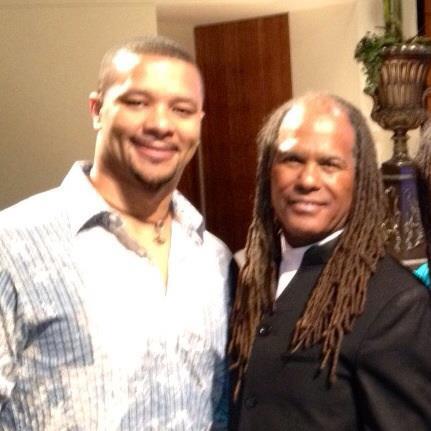
In The Answer is You Michael Bernard Beckwith (pictured with me above) speaks about the futility of complaining. Quoting Bob Marley, he states that complaining is like to praying to the devil. Think about that for a moment.

Think about the extent to which you complain about this or that; whatever negativity that happens to befall you at any given time. What I mean by negativity are circumstances that do not feel good.

Opening the pressure valve to discharge the negative energy difficult circumstances produce is healthy…to a point. Similar to crying, a venting session can free us of negative emotional energy so we can more effectively address situations. Unfortunately many get stuck complaining and never shift focus from problems to solutions.

The notion of prayers to the devil leads us to question what it means to pray and what are prayers? Prayers at a most basic level are thoughts. Whether we are asking for something, speaking intentions into the Universe or simply having a conversation with God, we do this through our thoughts. Those thoughts remain within the confines of the mind or are expressed vocally, always with an emotional accompaniment.

“As man thinks in his heart so shall he be.” These words remind us of the significance of our thoughts and feelings in creating the outcomes of our lives. We bring into focus and fruition that to which we direct our attention. I think it is safe to assume that we do not complain about what brings joy, peace and well-being. Therefore if mental and emotional energy is invested in complaining, our focus is on what feels bad.

We generally equate what is good with God and what is bad with the devil. Prayers to God are of thanksgiving and gratitude or to restore harmony in an area where disharmony has taken hold. The attention is on what is good; the good we have or the good we seek. Complaining however places attention squarely on what is wrong or bad which is nothing more than communing with the devil.

At a certain level of consciousness, what feels bad is not judged as being bad. At that level, all experience is understood as opportunity. If we truly believe there is no such thing as needless suffering, we entertain the question of the need, or opportunity, in suffering.

What is the gift in this experience? How is this experience that feels so awful a blessing to me? What trait, characteristic or capacity is this circumstance seeking to draw out of me or develop within me?

The questions above shift focus away from complaining. They also represent the shift from victimization to empowerment. We are all victimized in some way, by someone or something through the course of life. Life itself victimizes us in its own way. However, the assumption of a victim identity is a matter of choice.

In The Instant Millionaire Mark Fisher writes, “Always remember that at a certain height there are no clouds. If there are clouds in your life, its because your soul has not soared high enough…soar above the clouds where the sky is forever clear.”

That place above the clouds marks the ascent into the spirit realm; the place of elevated consciousness where meaning and purpose in our experiences is understood. It is the place where we understand that the difficulties we experience are in service to the soul’s growth and reason for taking on the adventure of physical and psychological life.

It serves us well to assume this soul-centered approach to understanding and responding to life’s experiences. Pain is part of life, suffering comes from our conversations with the devil; in both we are given opportunity. The glass is only half empty or half full from the perspective of the psyche but as we ascend above the clouds, we come to understand it is always overflowing.

I sometimes respond to the question, “How are you?” with the following response. “I could complain but it wouldn’t change things anyway.” That, however, is not completely true. Praying to the devil does change things as it brings into focus and fruition more negativity, disempowerment and suffering.

Instead of practicing complaining, practice gratitude. Practice appreciation. Practice thankfulness. Trust that all is in service of your greater good. Embrace all experience, source its gifts and blessings and soar above the clouds where the sky is forever clear.

Posted in Psychology, Spirituality | Tagged , , , , , , , , | 1 Comment

Midlife Awareness/Midlife Awakening

awakening
“I’ve spent most of my life
working at doing things better
Now, as I reach midlife, what
I care most about doing is being.”

The concept of midlife awareness was a reinterpretation offered by a friend when I mentioned writing about this topic. What is a crisis if not an opportunity for awareness?

As indicated by the title of Hollis’ book, meaning is arguably the most significant opportunity afforded us. Humanity has battled with the subject of meaning since the beginning of time. At a lecture given by religious scholar Jill Carroll, she asserts that religion seeks to answer the Ultimate questions: How did we get here? What are we supposed to do? Where did we come from? Where do we go when we leave? What are we supposed to do while we are here? Why are we here?

The question of meaning is one we wrestle with collectively as well as individually. Why am I here? What is it that I am to do with this life I have been given? What becomes significant at mid life is not the meaning of life but the meaning of my life.

As stated in my previous post, crisis is nothing more than an opportunity for awareness. The midlife crisis is characterized by the symptoms below:

*Unhappiness with life and the lifestyle that may have provided me with happiness for many years.
*Boredom with people and things that may have been of interest to me before.
*Exhaustion or frantic energy.
*Feeling a need for adventure and change.
*Questioning the choices made in life and the validity of decisions made years before.
*Confusion about who I am and where I am going.
*Anger at spouse and blaming them for feeling tied down.
*Doubting the love for a spouse and resentment over the marriage.
*A desire for a new and passionate intimate relationship.
*Sexual affairs, especially with someone much younger.
*Unable to make decisions about where to go in life.
*Irritability, unexpected anger.
*Acting on alcohol, drug, food, or other compulsions.
*Greatly decreased or increased sexual desire.
*Greatly decreased or increased ambition.

As stated thus far, profound opportunities are afforded us at midlife. With any developmental transition, we leave one way of being in favor of another higher, more advanced level. At midlife, we awaken to the soul’s invitation for greater meaning and purpose in the life we are living. The midlife transition often marks the awakening of the ego to the soul’s calling. While crisis has its own characterizing elements, so does awakening. Awakening to a more soul-centered approach to life involves the following shifts in consciousness:

*You let go and accept “what is” without struggling.
*You focus on the positive instead of the negative.
*You see the best in others and everything around you.
*You feel connected with all that is.
*You understand that you control your own happiness and that being happy comes from within.
*You are tuned in to your emotions and use them to guide you to feel better.
*You feel love, joy, hope, and optimism.
*You often feel inspired to take action.
*You are open to new ways of looking at the Universe.
*You come to understand that there is no death – we are eternal.
*You understand that you are both a physical and nonphysical being.

As humanity moves through its evolutionary course through existence, I am seeing this awakening happening collectively and in some cases earlier than midlife. At any point that we experience crisis, not only are we afforded the opportunity for awareness but the opportunity to awaken to an expanded consciousness and a new way of being in our lives.

Posted in Psychology, Spirituality | Tagged , , , , , , | 5 Comments

Midlife Crisis/Midlife Rebellion

mid-life-crisis
One of the most influential books I have read is Finding Meaning in the Second Half of Life by James Hollis. This book was recommended to me by a friend sometime in my mid thirties. I guess he suspected I was getting a jump on things. As I approached my 40th birthday, when all the insanity was supposed to occur, it seemed anticlimactic. Surely, just as I thought I had come to this developmental milestone without the stereotypical crisis, I found myself immersed in it.

Hollis and other Jungians speak of the midlife crisis as a point where life seems to have lost its meaning; a period of confusion and distress manifesting in what appears to be a regression in behavior. Perhaps rebellion is a more fitting term. Whether a function of awareness that ensuing years mark more lived than remaining, the half-way point of life is experienced much like a developmental earthquake for many.

There are two very distinct developmental periods associated with rebellion. The first is known as the terrible twos, the second, adolescence. According to Erik Erikson’s 8-stage developmental model, the initial rebellion occurs in service of autonomy, the second, to facilitate the formation of identity. Primary caretakers serve as the chief adversary in the process.

Midlife rebellion is more complicated as the targets of rebellion are the internalized messages, rules and expectations of parents, family, culture, religion, society, etc. The developmental stage of midlife and its accompanying rebellion serve the same ends of autonomy and identity just at a more advanced level and emerging from the essence and depth of one’s being- the soul.

Jung asserts that the greatest task in the second half of life is individuation, a concept almost identical to Abraham Maslow’s stage of self-actualization. Self-actualization is the final stage in Maslow’s hierarchy of needs in which we are concerned with living to our fullest potential. Theorists since Jung argue that individuation is a lifelong endeavor. Essentially individuation is a process of psychological maturity in which a person lives ever more fully and securely from the place of his/her authentic Self.

Though individuation occurs throughout life, the first half of life, psychologically, is consumed with the development of the ego; that sense of “I” arising through acting and interacting with the external world. In more practical terms, we are consumed with the acquisition of knowledge and skills to make our way in the world- meeting basic needs, the demands of career, family and existing as part of the collective.

Why crisis at midlife? Why not sooner? One view is associated with the esteem stage of Maslow’s hierarchy of needs. Once our basic needs have been met along with the need for safety and love and belonging, the need for esteem- external and internal- takes precedence. High self-esteem is the hallmark of a strong sense of self or strong ego. It is believed that at midlife we have been on the planet and in our skin just long enough to summon the courage to rebel against the commandments of the external world…and withstand the backlash likely to occur.

As so much energy is directed toward navigating the external world, the redirection inward at midlife often leaves us bewildered, not only wondering whose life I have been living, but who am I, really?! Out of the dissonance often emerges the quest for that which aligns us to our own inner truths. This often appears as a regression to previous years inclusive of the same manner of experimentation occurring in adolescence.

Perhaps this is the ego’s feeble attempts to respond to an invitation toward its own expansion. Unfortunately, perhaps because of a lack of understanding many proceed through this period recklessly and haphazardly. Thus, crisis is manifested as rebellion; however, the opportunity to source deep and profound meaning for one’s life is presented.

Posted in Psychology, Spirituality | Tagged , , , , , , , , , , | 2 Comments

A New, Old Friend

St. Ignatius
Along with posting random thoughts from the insignificant to the profound, social media affords the opportunity to reconnect with friends and acquaintances from the past. Playing around on Facebook one night about a year ago, I remembered someone from elementary school; just one of those random thoughts emerging out of nowhere. So I typed her name in the search field and there she was.

After sending a brief message, she responded and now I have a new, old friend. As it turns out she is battling a very difficult health condition. She spoke of the challenges, both physical and emotional, brought on by the ailment. But she also spoke of the invaluable support received from family and friends.

I was even more surprised by the gratitude extended to me for sending a very simple message asking if she was the same person I remembered from years ago. Without even realizing it, I had become part of her circle of support.

That such a simple act meant so much reminds me that simple and unintended behaviors can and do mean so much. We have since exchanged messages catching up on the twists, turns and bends our lives have taken in the years beyond elementary school.

In those few exchanges, I came to the awareness of my own appreciation for her transparency and willingness to share heartfelt sentiments. I find inspiration in her positive outlook and ability to source joy and hope despite her difficulties.

Our interaction reminded me of three very important factors that impact the quality of our lives: a good support system and meaningful connections, simple and random acts of kindness and the willingness to find light in the darkest places. The light is always there if we are sincere in our efforts to find it. Though it may be dim, it is still light. And with it we see our way through the darkness.

As I close and reflect on my friend’s gratitude in response to me reaching out to her, I find that I am the one grateful; for her sincerity and for helping me to remember some of the big, little things that make life worth living.

Posted in Uncategorized | Tagged , , , , | 1 Comment

Embracing Grief and Loss

2649_1100865008260_2430479_n
No shortage of differences exists within the human family. Sadly, these differences are often exploited instead of celebrated. The natural and divinely orchestrated diversity of humanity is often used to create separation and division- the “us and them” mentality that leads some to believe their humanity somehow supersedes that of another. No greater delusion exists as the humanity we share elevates and reduces us to equals.

Despite inherent differences of born of genetics or the manufactured divisions of race, religion or any number of self-identifications, we all think, feel, act and have an experience of life. Our shared humanity brings to each of us difficulty, pain and the inevitability of change and loss.

Grief is called forth by loss, the antithesis of the deeply rooted and core instinct to bond. Attachment and bonding ensures our survival from the onset of life. Loss activates a primal panic- the deep existential anxiety born of the terror of being apart from rather than a part of. As a result, grief elicits compassion; a function of limbic resonance too powerful to ignore in all but the most sociopathic among us.

Once life begins, each passing moment is a step toward its ending. The years from birth to death are filled with numerous changes and endings, each necessary for the unfolding expression of the purpose in our being.

Often the pains and difficulties of life are brought forth by the losses we endure, yet, these losses in the words of Judith Viorst are necessary. We must lose the comfort of the mother’s womb to enter the world. The carefree years of childhood give way to the responsibilities of adulthood. We must leave the home created for us to create our own. The passing of our parents ordains us leaders of our lineage. Entrusted with the light of the ancestors, we assume responsibility for illuminating the path for successive generations.

These necessary losses are expected and tolerated with greater ease than those deemed unnecessary. Certainly the loss of a young child would fall into this category, yet many, despite unbearable pain, find meaning, purpose and often mission through such tragedies.

John Walsh serves as an example. I am also reminded of the lesser known story of Azim Khamisa, whose son was killed by a fourteen year old boy. Khamisa, a sufi Muslim, relied on his faith for solace. Forgiveness came after reaching the conclusion that “there were victims on both ends of the gun”. He befriended the grandfather and guardian (Ples Felix) of the boy who killed his son and both often speak together to prevent acts such as the one that ended the life of Khamisa’s son and earned Felix’s grandson a 25 year prison sentence.

While certain losses may serve as exceptions to the general rule that “this too shall pass”, the pain that accompanies loss is governed by the same cosmic law of impermanence. That is, unless we resist the grief the process.

All undesirable emotions compel us toward corrective action. The sadness and pain of loss obliges us to grieve; a process which usually begins with shock and disbelief followed by a roller coaster of mental and emotional experiences that can include guilt, anger, bargaining, depression, reflection and isolation.

Efforts to cope leave us susceptible to addictions of varying kinds and displaced anger may compromise relationships. We may seek irrational deals with God or anyone to avert the loss. At some point we are capable of grasping the reality of the loss which ushers in memories of the past. During these times we may prefer the company of our memories rather than supportive friends or family. This may be the most difficult part of grieving as defenses are stripped away and the loss is fully realized.

As periods of depression and reflection are experienced they give way to relief; a lifting of the burden loss places on us. While the process is not over, we may begin to see light at the end of the long, dark tunnel that is grief. Grief may hold us tightly in its grasp however life continues its forward motion. The upward turn as it is referred to marks a certain re-engagement with life and the responsibilities and tasks of living.

As one door closes another opens. The disorientation brought on by loss gives way to reorienting oneself to a new life, new roles, new responsibilities, new relationships and new experiences; a rebirth that allows one to find and experience the joy in living again while peacefully, lovingly and joyfully holding the memory of what or who has been lost. The doors that open can be fully embraced provided we have gone through the necessary process to make peace with what is past.

Time is an ally in accepting and adapting to loss however many remain burdened the by passing of a loved one or a lost love years later. Time alone does not ensure adequate processing of grief. It is a journey to be consciously and courageously embraced. Un-grieved losses hold us frozen in time clinging to an aspect of our lives that has served its purpose, bestowed its wisdom and invited us to continue the work of the soul…whatever that may be.

Perhaps it is to devote the remainder of one’s life to bringing criminals to justice. Perhaps it is to help youth avoid the perils of gang life. Perhaps it is to experience and model for others the joy can be experienced in the years after raising a family and losing a life partner of nearly fifty years.

The divisions and separations we create for ourselves pale in comparison to the power and depth of our common humanity, especially in matters of grief and loss. We are well served to embrace it and not avoid it; for the experience is universal…and necessary. Loss demands of us that we grieve. In doing so, we are able to make peace with and hold in reverence the past and open ourselves to the new experiences awaiting us.

Posted in Psychology, Spirituality | Tagged , , , , , , | 1 Comment

The Spirituality of Forgiveness

luke_23-34
My previous post addressed the psychological rather than the spiritual as it relates to forgiveness; however, one cannot ignore the relevance of the spiritual dimension. Forgiveness is as much an act of spiritual maturity as it is psychological maturity. Historically the matter of forgiveness has been the domain of faith traditions, particularly Christianity.

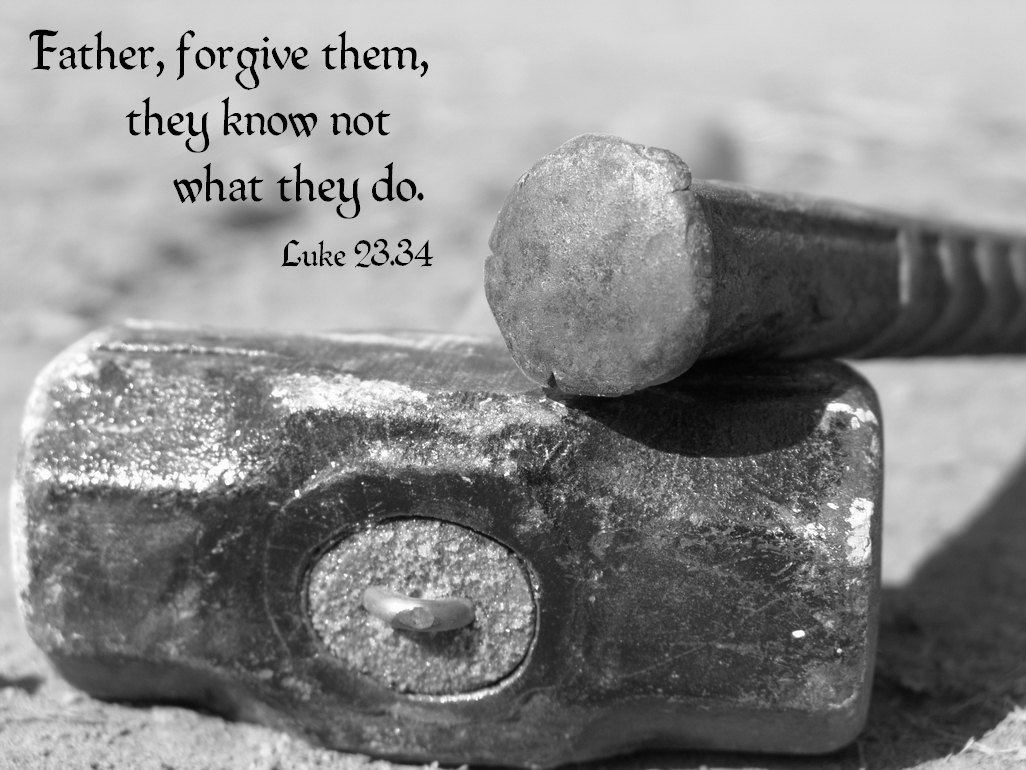
Perhaps the grandest historical act of forgiveness occurs as Jesus is being crucified. “Father, forgive them for they know not what they do!” What allowed Jesus to extend forgiveness toward his persecutors in the midst of his own crucifixion?

One must understand Jesus in the context of enlightened consciousness which is synonymous with the highest levels of spiritual and psychological maturity. From the perspective of enlightened consciousness, a wider and larger view of life is held. Greater clarity and understanding emerges which offers a more expansive perspective from which to view oneself, others and oneself in relation to others.

Understanding Jesus in context of others is similar to understanding an adult in the context of a child. It is not my intent to shame by using this analogy but to simply make a point. An adult understands the naiveté of a child and responds to them with the knowing of the child’s limited awareness and knowledge about matters of life. Children act childishly, not because they are bad but because they do not know better. And even if they know better, they often lack the impulse control or emotional regulation capacity to properly contain behavior; which is essentially another form of not knowing.

Consider a kindergarten teacher who is kicked by an angry student. The teacher understanding her level of maturity as well as the child’s and does not lash out at the student. She functions with a level of knowing that allows her to put the behavior in the proper context of its naiveté, therefore, holding no ill will toward the child. Despite the physical discomfort that may be felt, she is aware the child “does not fully know”, and responds accordingly.

Forgiveness with regards to the spiritual dimension is an act of raising one’s consciousness to a level beyond the offending event; allowing a piece of divinity to enter, elevating and expanding awareness that allows one to rise above and assume a new knowing. Forgiveness requires an expanded consciousness and expands consciousness. Forgiveness is an act of growth and maturity and fosters growth and maturity. As we forgive we grow and as we grow we can more easily forgive.

Posted in Psychology, Spirituality | Tagged , , , , , | Leave a comment